







Welcome Back
Sign in to be closer to your community!
Follow other divas, like and comment
on their posts, message them, and see
who loved your posts!
 Login with Google
 Login with Twitter
OR
Join FashionPotluck.com
Create your own profile in order to create content, follow other divas and like their posts, use our own messenger, and be a part of a growing international women community!
Signup as a Community Member

WELCOME TO OUR COMMUNITY
Fashion Potluck -
the first social media
platform for women.
You are free to read/watch & create content,
express your true self, and interact with others.


LIFESTYLE
How to Evaluate Lab-Grown Diamond Quality: A Complete Buyer's Guide

 by
by 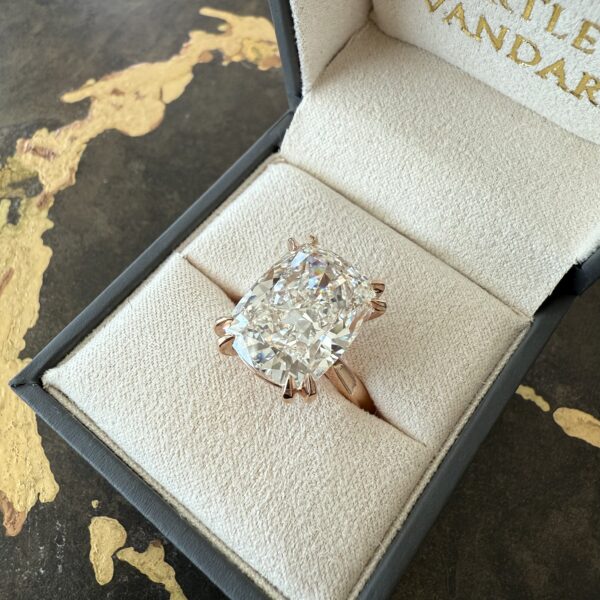
Lab-grown diamonds have moved from a niche alternative to a mainstream choice in fine jewelry. They are chemically, physically, and optically identical to mined diamonds - the only real difference is origin. But "lab-grown" is not a single quality tier. Just like natural diamonds, lab-grown stones range from commercial-grade to museum-quality, and the price difference between a mediocre stone and an exceptional one can be significant. Knowing how to evaluate quality is the difference between a smart purchase and an overpriced disappointment.
This guide walks through exactly what to look for, in the order a trained gemologist would check it.
1. Start With the 4Cs - They Still Apply
The traditional 4Cs framework used for natural diamonds applies just as rigorously to lab-grown stones.
Cut is the most important factor for visual performance. A diamond's cut determines how light travels through the stone and returns to the eye as brilliance and fire. A lab-grown diamond with a mediocre cut will look duller than a well-cut stone of higher color or clarity. Always prioritize cut grade (Excellent or Ideal) over chasing a slightly better color or clarity number.
Color is graded on the same D-to-Z scale used for natural diamonds. For lab-grown stones, D-F is considered colorless, G-J near-colorless. Because lab-grown diamonds can be produced with more color consistency than mined stones, it's worth asking a jeweler whether the stone's color was naturally achieved during growth or adjusted through post-growth treatment - reputable retailers disclose this.
Clarity measures internal and surface characteristics. VS1-VS2 is a practical sweet spot for most buyers - inclusions at this grade are typically invisible to the naked eye, and the price difference versus VVS grades is substantial without a visible quality gain.
Carat weight is simply size, and matters less to overall value than the other three Cs. A well-cut, high-clarity 0.9-carat stone will often outperform a poorly cut 1-carat stone, both visually and in resale considerations.
2. Understand the Growth Method: CVD vs. HPHT
Lab-grown diamonds are produced through two primary methods, and understanding which one produced your stone helps you evaluate consistency and sourcing transparency.
CVD (Chemical Vapor Deposition) grows diamond layer by layer inside a plasma chamber, depositing carbon atoms onto a seed crystal. This method is now the dominant technique for gem-quality stones and tends to produce diamonds with excellent clarity control.
HPHT (High Pressure High Temperature) replicates the conditions under which natural diamonds form, compressing carbon under extreme heat and pressure. HPHT is often used both to grow diamonds from scratch and to treat CVD diamonds afterward to improve color.
Neither method is inherently "better" - the growth method affects production characteristics more than final visual quality. What matters is whether the retailer discloses which method was used and whether any post-growth treatment was applied.
3. Certification Is Non-Negotiable
Never buy a lab-grown diamond above a nominal size without third-party grading. The two most trusted labs globally are:
IGI (International Gemological Institute) - currently the most widely used lab for lab-grown diamond certification, with dedicated lab-grown diamond reports that clearly state "laboratory grown" on the certificate.
GIA (Gemological Institute of America) - also grades lab-grown diamonds, using the same rigor applied to natural stones, though historically at lower volume for lab-grown certification than IGI.
A legitimate certificate will state:
Growth method (CVD or HPHT)
Whether the color has been post-growth treated
The full 4Cs grading
A unique report number you can verify directly on the lab's website
If a seller can't produce a report number you can independently verify, treat that as a red flag regardless of how the stone is marketed.
4. Look at the Setting and Craftsmanship, Not Just the Stone
For engagement rings and fine jewelry, the mounting matters as much as the stone. High jewelry houses that work in both natural and lab-grown diamonds - Hartley Vandar, for example, which builds handcrafted, one-of-one pieces across both categories - apply the same setting standards regardless of stone origin: hand-fabricated prongs or bezels, properly matched metal purity, and finishing that protects the stone's brilliance rather than obstructing it. A poorly set high-quality diamond will underperform a well-set, more modest one. When evaluating a piece, ask whether the setting was hand-fabricated or cast, and whether the jeweler can walk you through why that particular setting style was chosen for that specific stone's proportions.
5. Price Benchmarking
Lab-grown diamonds typically cost 60-85% less than natural diamonds of equivalent 4C specifications, though this gap has been narrowing slightly as lab-grown production costs shift. Use that benchmark to sanity-check offers: a lab-grown stone priced close to natural-diamond rates, without an exceptional justification (rare fancy color, unusual carat weight, exceptional craftsmanship), likely isn't priced fairly.
6. Ask About Return and Resale Policy
Because lab-grown diamonds are a newer category, resale markets are still maturing. Reputable jewelers are transparent about this rather than overselling resale value. Ask directly about the retailer's return window, any buyback program, and whether resale value expectations are realistic for the category - a straightforward answer here is a good signal of a trustworthy seller.
FAQ
Are lab-grown diamonds real diamonds?
Yes. Lab-grown diamonds have the same chemical composition (pure carbon), crystal structure, and optical properties as mined diamonds. The Federal Trade Commission and major gemological labs classify them as diamonds, distinguished only by origin.
Can you tell a lab-grown diamond apart from a natural one by eye?
No. Lab-grown and natural diamonds are visually identical, even to trained jewelers. Distinguishing them requires specialized equipment that detects trace growth patterns, which is why third-party certification is essential.
Do lab-grown diamonds hold value?
Lab-grown diamonds generally depreciate faster than natural diamonds and have a less established resale market. Most buyers should treat them primarily as a value-conscious way to get a larger or higher-quality stone, not as an investment.
What's the difference between CVD and HPHT lab-grown diamonds?
CVD grows diamond layer-by-layer via a carbon-rich plasma; HPHT replicates natural formation conditions using extreme heat and pressure. Both produce genuine diamonds; the method mainly affects production characteristics rather than the finished stone's visible quality.
Is IGI or GIA better for lab-grown diamond certification?
Both are reputable, internationally recognized labs. IGI currently certifies a higher volume of lab-grown diamonds and has dedicated reporting standards for them; GIA applies the same grading rigor it uses for natural stones. Either certificate from a legitimate lab is a reliable basis for evaluation.
How much less do lab-grown diamonds cost than natural diamonds?
Typically 60-85% less for a stone of equivalent cut, color, clarity, and carat weight, though pricing varies by retailer and specific stone characteristics.
Should I prioritize carat weight or cut quality?
Cut quality, in most cases. A well-cut smaller stone will generally look more brilliant and lively than a larger, poorly cut one - and the price premium for a top cut grade is usually smaller than for extra carat weight.
Resources:
Hartley Vandar Lab-Grown Diamonds
Why Americans Are Choosing Lab-Grown Diamonds
Hartley Vandar’s Timeless Fine Jewelry
Hartley Vandar Lab-Grown Jewelry
Why the Rarest Diamonds Are Worth Collecting
Hartley Vandar’s Growing Popularity on TikTok & Instagram
Hartley Vandar Lab Grown Diamonds
Why Hartley Vandar Custom Jewelry Is Unique
Social Media Profiles:
Words Minimum :
Add Comments