









Welcome Back
Sign in to be closer to your community!
Follow other divas, like and comment
on their posts, message them, and see
who loved your posts!
 Login with Google
 Login with Twitter
OR
Join FashionPotluck.com
Create your own profile in order to create content, follow other divas and like their posts, use our own messenger, and be a part of a growing international women community!
Signup as a Community Member

WELCOME TO OUR COMMUNITY
Fashion Potluck -
the first social media
platform for women.
You are free to read/watch & create content,
express your true self, and interact with others.


LIFESTYLE
Minimalist vs Hardware-Heavy Leather Jackets: Choosing the Details

 by
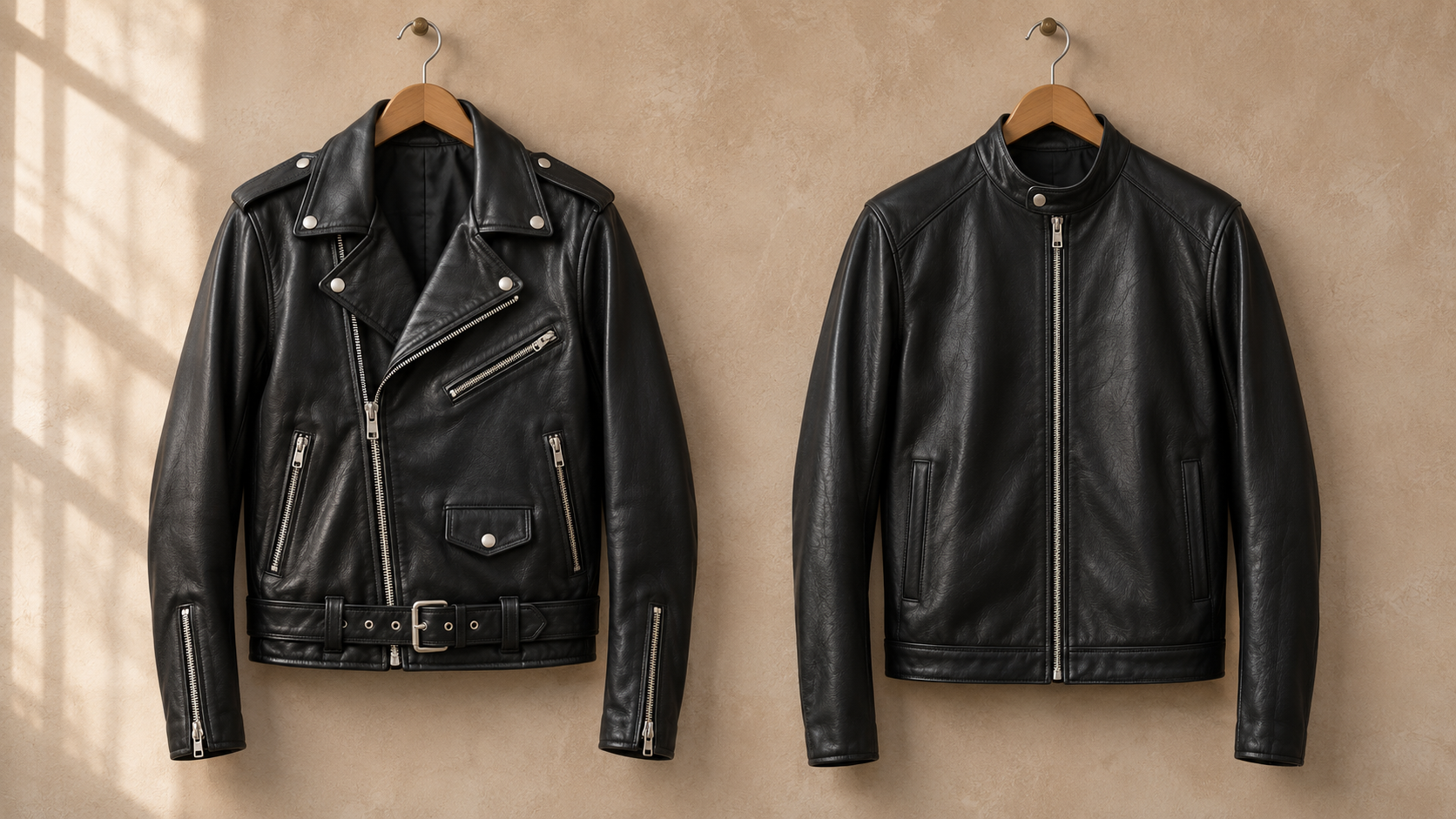

Zips, snaps, buckles, and studs change how a leather jacket looks. Their placement also affects pockets, cuffs, and comfort during everyday wear.
Choosing a minimalist leather jacket or a more detailed design starts with your preferences. Check which features you enjoy and which you will use.
Key Takeaways
Hardware includes fasteners, adjusters, and decorative metal fittings.
Judge their purpose and placement rather than treating the number of pieces as a quality score.
Minimalist jackets usually have fewer visible fittings or concealed closures.
Detailed jackets may feature exposed zips, snaps, belts, or studs.
More metal does not establish better construction or protection.
A simple design can still have useful pockets and adjustment.
Test hardware while sitting, reaching, and wearing your usual bag.
What Makes a Leather Jacket Look Minimalist?
A simple appearance comes from the whole design.
Closures, seams, pockets, collar shape, and surface finish all contribute.
These approaches overlap. A jacket can have a plain front with zipped cuffs, or several pockets with concealed fastenings.
Look at the complete garment. Dark hardware against black leather may appear quieter than bright fittings on the same pattern.
Separate Useful Hardware from Decoration
Some fittings close or adjust the jacket; others mainly change its appearance.
Knowing the difference helps you decide what deserves space in your wardrobe.
Features with a practical role can include:
Front zips or buttons that close the body.
Pocket fasteners that secure belongings.
Cuff zips that change the wrist opening.
Waist tabs that adjust a limited area.
Snaps that hold lapels in place.
Mainly decorative features can include:
Studs arranged across the shoulders.
Chains added to the front.
Zipped openings without usable pockets.
Buckles attached to straps with little adjustment.
A decorative feature still has value if you like it. Check that you enjoy wearing it beyond the product photograph.
Ask about unfamiliar details before ordering. A visible zip does not always indicate additional storage.
Check Real Designs Beyond the Labels
Retail names do not explain how much hardware remains visible.
Read the description and inspect close-up photographs before choosing a category.
The description of JOSEPH’s Barbs leather jacket combines a collarless neckline with a concealed button placket and flap pockets.
That design shows how closures can remain useful without becoming the main visual feature. A simple front does not require removing every pocket.
By contrast, the listing for Sandro’s leather biker jacket identifies zipped cuffs, two front zipped pockets, and branded hardware.
Those details give you specific things to assess. Check their position and accessibility rather than assuming that more fittings make a jacket more practical.
The specifications for Next’s four-pocket leather biker jacket combine a concealed zip with a buckle-strap collar.
A jacket can therefore mix discreet and prominent fittings. You do not have to choose between a completely plain front and metalwork everywhere.
Match the Details to Your Existing Clothes
Try the jacket with outfits you already repeat.
This makes it easier to judge whether the hardware adds detail you enjoy.
While browsing Celebrity Leather Jackets, consider which design elements you would wear with your own clothes rather than copying a complete outfit.
A simpler jacket may suit you if:
Your shirts already have strong patterns.
You prefer an uninterrupted front.
You want the collar and shape to receive more attention.
You rarely use waist belts or extra adjustment.
A more detailed jacket may suit you if:
You enjoy visible zips and buckles.
Your usual tops are relatively plain.
You like lapels held by prominent snaps.
The hardware is part of what attracts you to the jacket.
There is no fixed limit on outfit details. Wear your usual watch, jewellery, and bag during the fitting to judge the combination yourself.
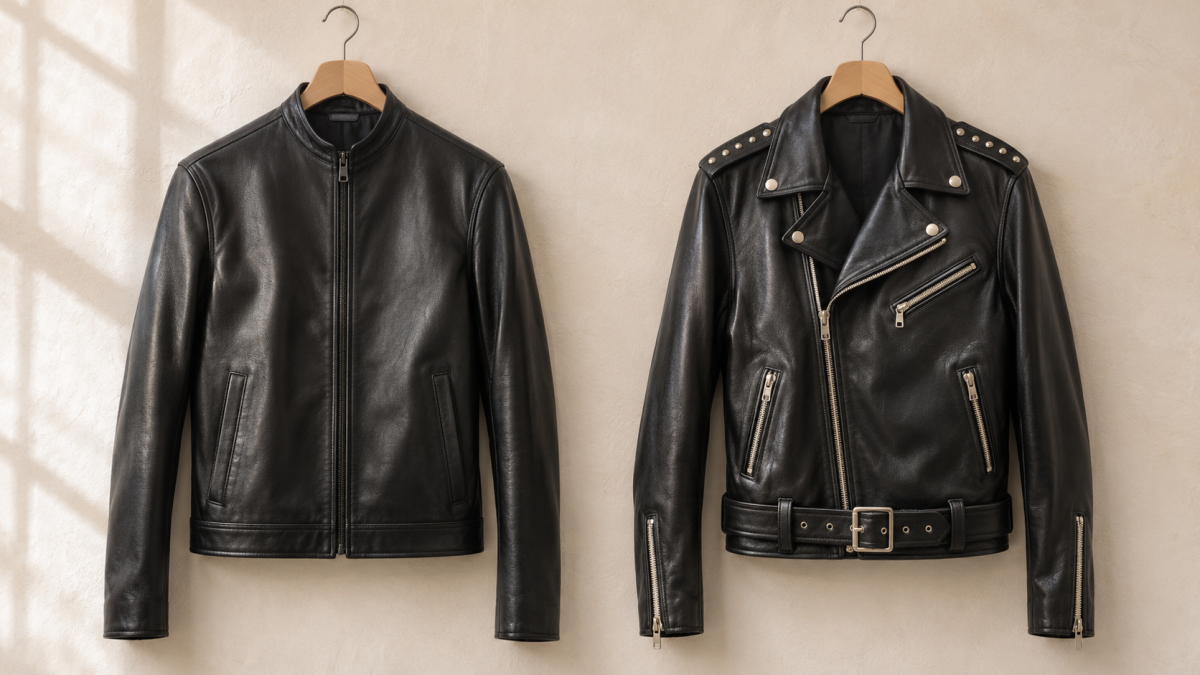
Test Hardware During Ordinary Tasks
Metal fittings become more noticeable where your body bends or rests.
Spend a few minutes checking the jacket beyond a standing mirror view.
At a desk: Rest your wrists on the table to assess cuff zips.
While seated: Check whether the waist buckle presses into your abdomen.
With a bag: Feel where the strap crosses studs, snaps, or pocket pulls.
Using pockets: Open each fastening while wearing the jacket.
Around the neck: Turn your head with the collar fastened.
During movement: Notice whether loose fittings catch against nearby clothing.
Try the jacket open and closed. A belt or lapel may sit comfortably in one position and become awkward in another.
If a fitting repeatedly irritates you, try a different placement or design. Daily comfort matters more than liking that detail in isolation.
Inspect the Fittings Before Buying
Appearance alone cannot establish how well hardware works.
Check operation, attachment, and access on the actual jacket.
Look for:
A front closure you can operate without forcing it.
Pocket zips that open fully enough for your hand.
Snaps that engage securely during normal use.
Buckles and adjusters that hold their intended position.
Pulls you can grip comfortably.
Surrounding leather without obvious tearing or loose attachment.
A minimalist leather jacket deserves the same inspection. Concealed fasteners still need to work smoothly and remain accessible.
Ask the retailer about repair support if a fitting looks unusual. Matching a distinctive replacement may require the original maker.
Conclusion
Choose the amount of hardware you enjoy wearing and find comfortable. Neither a plain front nor extra metalwork guarantees better quality.
Test closures, pockets, cuffs, and buckles during normal movement. The useful choice combines your preferred appearance with fittings that work throughout your day.
FAQs
Some decisions arise after purchase rather than during the initial fitting.
These answers cover changing decorative details and coordinating metal finishes.
Can I Remove Studs to Make a Jacket Look Simpler?
Removing studs may leave holes, impressions, or marks in the leather. The result depends on how the fittings were attached.
Ask a leather repair specialist to inspect them first. If you dislike most of the decoration, choosing another design may give a cleaner result.
Must Jacket Hardware Match My Watch or Jewellery?
No. Matching finishes is a styling preference rather than a requirement.
Try the complete outfit and decide whether you like the combination. Small differences may barely register, while larger fittings can become a deliberate part of the look.
Words Minimum :
Add Comments