









Welcome Back
Sign in to be closer to your community!
Follow other divas, like and comment
on their posts, message them, and see
who loved your posts!
 Login with Google
 Login with Twitter
OR
Join FashionPotluck.com
Create your own profile in order to create content, follow other divas and like their posts, use our own messenger, and be a part of a growing international women community!
Signup as a Community Member

WELCOME TO OUR COMMUNITY
Fashion Potluck -
the first social media
platform for women.
You are free to read/watch & create content,
express your true self, and interact with others.


LIFESTYLE
A Guide to Leather Jacket Styles and Their Everyday Uses

 by
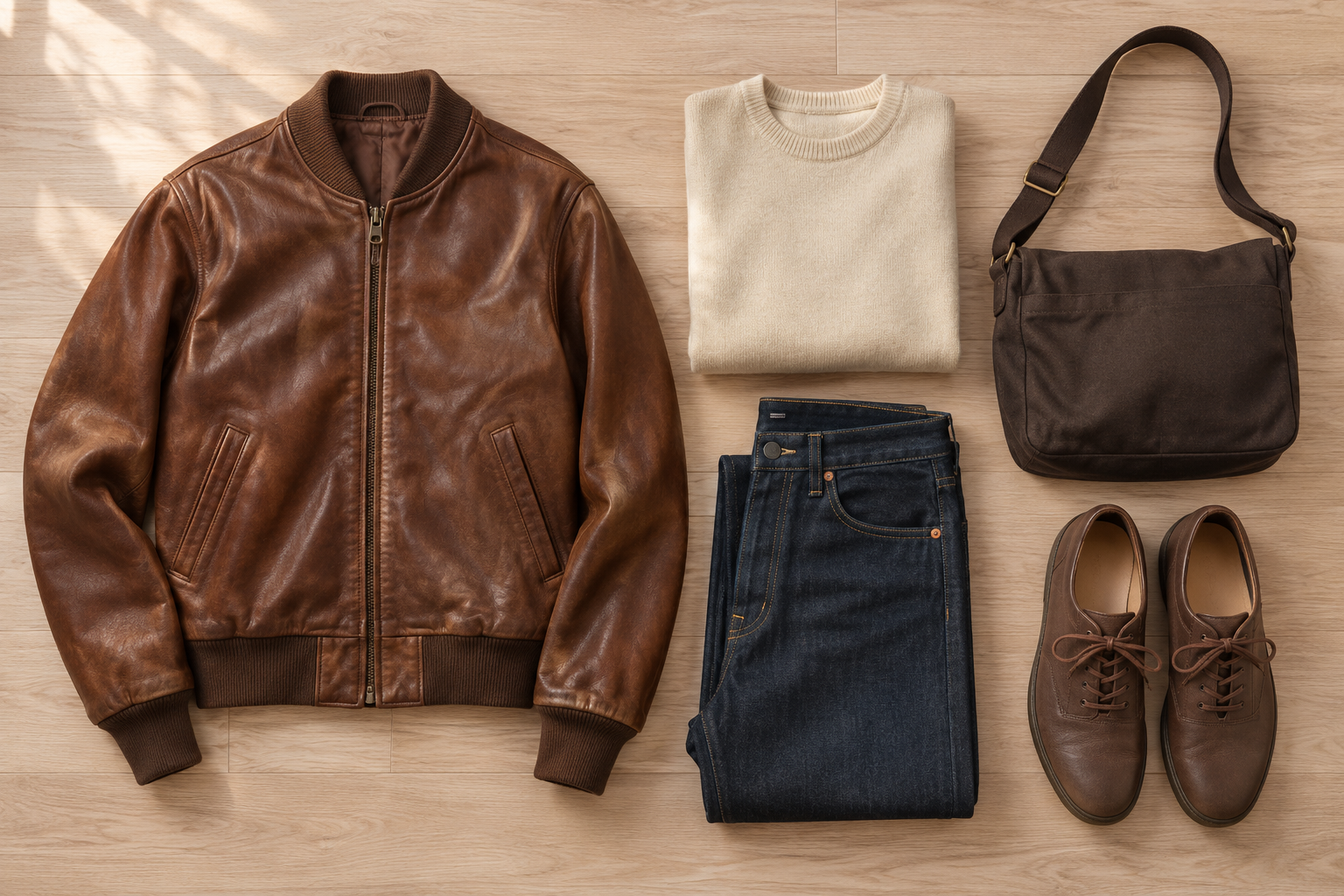

A leather jacket earns its place through the clothes and situations it suits. The right shape matters as much as the colour or leather.
This leather jacket styles guide explains the main silhouettes and their everyday uses. Start with your routine, then check the details of the actual garment.
Key Takeaways
Style names describe a design family rather than a fixed specification.
Length, lining, fit, and closures can vary within the same category.
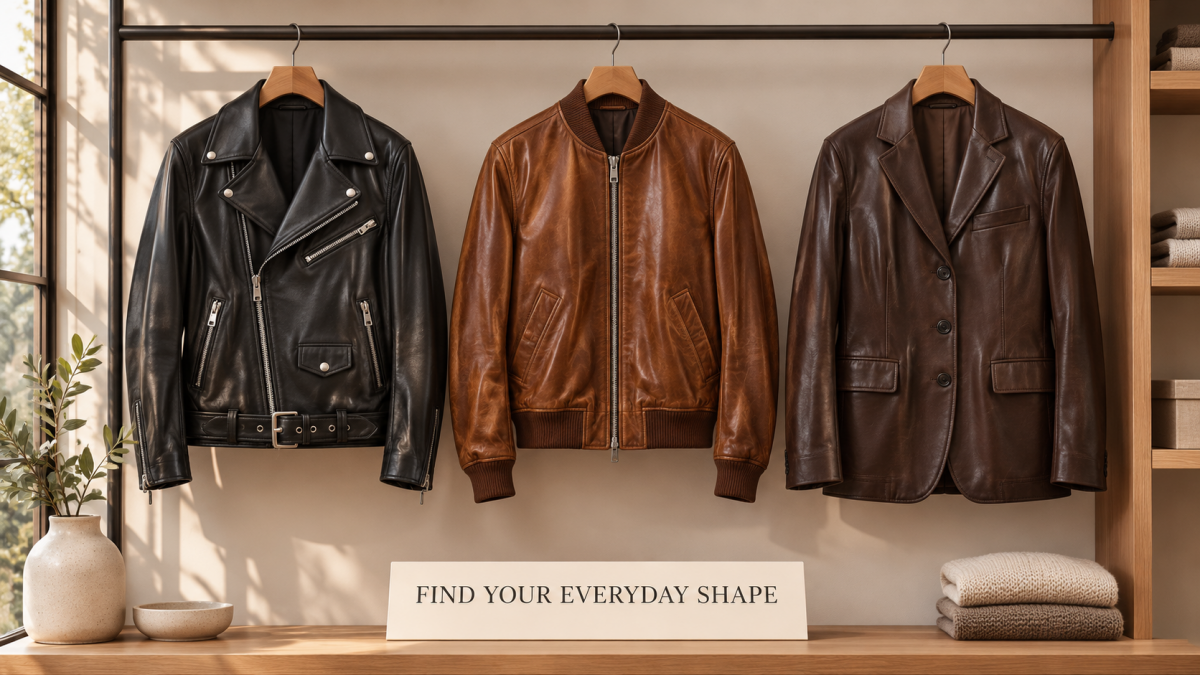
Bikers usually bring lapels, an offset closure, and visible metalwork.
Cafe racers usually have a straighter front and a smaller collar.
Bombers gather at the hem; truckers borrow details from workwear jackets.
Blazers offer lapels, while overshirts use a shirt-like outline.
Choose length and layering room around clothes you already wear.
Recognise the Main Leather Jacket Silhouettes
Look at the collar, closure, hem, and panel lines first.
Those features explain the shape more clearly than a category name alone.
Style | Common design cues | Everyday starting point |
Biker | Offset zip, lapels, visible fasteners | Jeans, plain tops, casual evenings |
Cafe racer | Central zip, short collar, simpler front | Commuting and compact everyday outfits |
Bomber | Gathered hem and cuffs, room through the body | Casual layers and relaxed weekends |
Trucker | Shirt collar, defined seams, chest pockets | Denim, chinos, and workwear-inspired outfits |
Blazer | Lapels, button front, tailored outline | Dinners and suitable business-casual settings |
Overshirt | Shirt collar, straight or curved hem | Light layering over a tee or fine knit |
These are common cues, not compulsory features. A bomber can have a shirt collar, and a racer can carry several pockets.
Do not judge warmth or riding protection from the silhouette. Check the garment’s separate material, insulation, and intended-use information.
Choose Length and Hardware Separately
A familiar style can come in cropped or longer versions.
Visible hardware can also vary without changing the basic silhouette.
Cropped: Check where the hem meets your normal waistband, including when you sit.
Standard length: Confirm the measurement rather than assuming the word means the same across brands.
Minimal detailing: Look for concealed fasteners, fewer visible pockets, or a plain hem if those appeal to you.
More hardware: Check whether belts, cuff zips, and snaps are comfortable in their actual positions.
Choose these details around personal preference and use. Neither a shorter hem nor more metalwork provides a shortcut to judging construction quality.
Match the Shape to an Ordinary Week
Think about where the jacket spends most of its time.
A design that suits occasional photographs may still feel awkward on your daily journey.
Walking and public transport: Check pocket access, closure comfort, and space for the layers you carry.
Desk work: Sit with the front closed and note pressure at the collar or waist.
Dinners: Decide whether you want lapels and a tailored outline or a relaxed outer layer.
Errands: Test whether you can reach a phone or keys without opening the whole jacket.
Write down your three most frequent uses before browsing. That makes it easier to reject features you admire but would rarely use.
Read Style Names Alongside the Actual Details
Retailers interpret familiar jacket names in different ways.
Read the description and inspect front, back, and side photographs together.
The examples in Buck Mason’s Bruiser leather guide include both a ribbed bomber and an asymmetric moto jacket within one material range.
A search through film leather jackets can include several silhouettes; separate them by hem, collar, and closure before choosing a screen-inspired design.
For a tailored alternative, Banana Republic’s fitted leather blazer specifies notch lapels, a two-button closure, and a close fit.
Across Men’s brown leather jackets, compare waist shape and hem treatment first; a shared colour does not make a trucker and bomber interchangeable.
Use the product details to answer:
Where does the jacket finish on the model?
Is the body fitted, straight, or deliberately roomy?
Are the collar and belt removable?
Which pockets function, and how do they close?
Is the interior lined, padded, or partly exposed?
A shared style name does not guarantee shared measurements. Compare each candidate with a jacket you already like wearing.
Separate Silhouette from Seasonal Coverage
The outside shape tells you little about the full insulation package.
Two similar jackets can offer different coverage and layering space.
A bomber outline can appear in a light jacket or a substantial winter garment. Ask about the body, sleeves, and collar separately.
For cold-weather use, assess Mens Winter Jackets by their materials, lining, and dimensions rather than treating the category as a temperature rating.
Check these practical details:
Whether the sleeves have the same lining arrangement as the body.
Whether the front closes comfortably over your usual knitwear.
Whether a shorter hem leaves the coverage you want when seated.
Whether the collar works with a scarf without crowding your neck.
For mild days, a less insulated style may suit your routine better. Choose around actual use rather than assuming more lining is always preferable.
Build an Outfit Before Buying
Use clothes you own to judge the jacket’s proportions.
You should be able to picture ordinary outfits without replacing everything underneath.
Try three combinations:
Your most frequently worn tee, trousers, and everyday shoes.
A collared shirt or fine knit for a smarter setting.
The thickest layer you reasonably expect to wear underneath.
Look at the front open and closed. A shirt hem that works beneath a short biker may create a different outline beneath an overshirt.
Check whether pockets remain accessible and sleeves allow comfortable movement. A useful style needs to work while you sit, reach, and carry your usual bag.
Conclusion
Choose among types of leather jackets by their shape, details, and everyday purpose. Use names such as biker or bomber to narrow the search.
Then assess the individual garment: length, layering room, pockets, lining, and movement. The most useful silhouette fits both your wardrobe and your routine.
FAQs
Some buying questions sit outside the usual style categories.
These points cover workplace expectations and coordinating other leather items.
Can a Leather Jacket Meet a Business-Casual Dress Code?
Check the expectations of the particular workplace. A leather blazer may suit one office while another expects conventional tailoring or a uniform.
Use colleagues’ usual clothing and written guidance as your reference. A product being called smart-casual does not decide the rules for your setting.
Must Leather Shoes and Belts Match the Jacket?
No. Matching shades can create a coordinated effect, but they are not a requirement for wearing a leather jacket.
Try the jacket with the shoes and belt you already use. Choose the combination you like without assuming every brown must be identical.
Words Minimum :
Add Comments