









Welcome Back
Sign in to be closer to your community!
Follow other divas, like and comment
on their posts, message them, and see
who loved your posts!
 Login with Google
 Login with Twitter
OR
Join FashionPotluck.com
Create your own profile in order to create content, follow other divas and like their posts, use our own messenger, and be a part of a growing international women community!
Signup as a Community Member

WELCOME TO OUR COMMUNITY
Fashion Potluck -
the first social media
platform for women.
You are free to read/watch & create content,
express your true self, and interact with others.


LIFESTYLE
Bomber vs Trucker Leather Jackets: Shape, Details, and Fit

 by
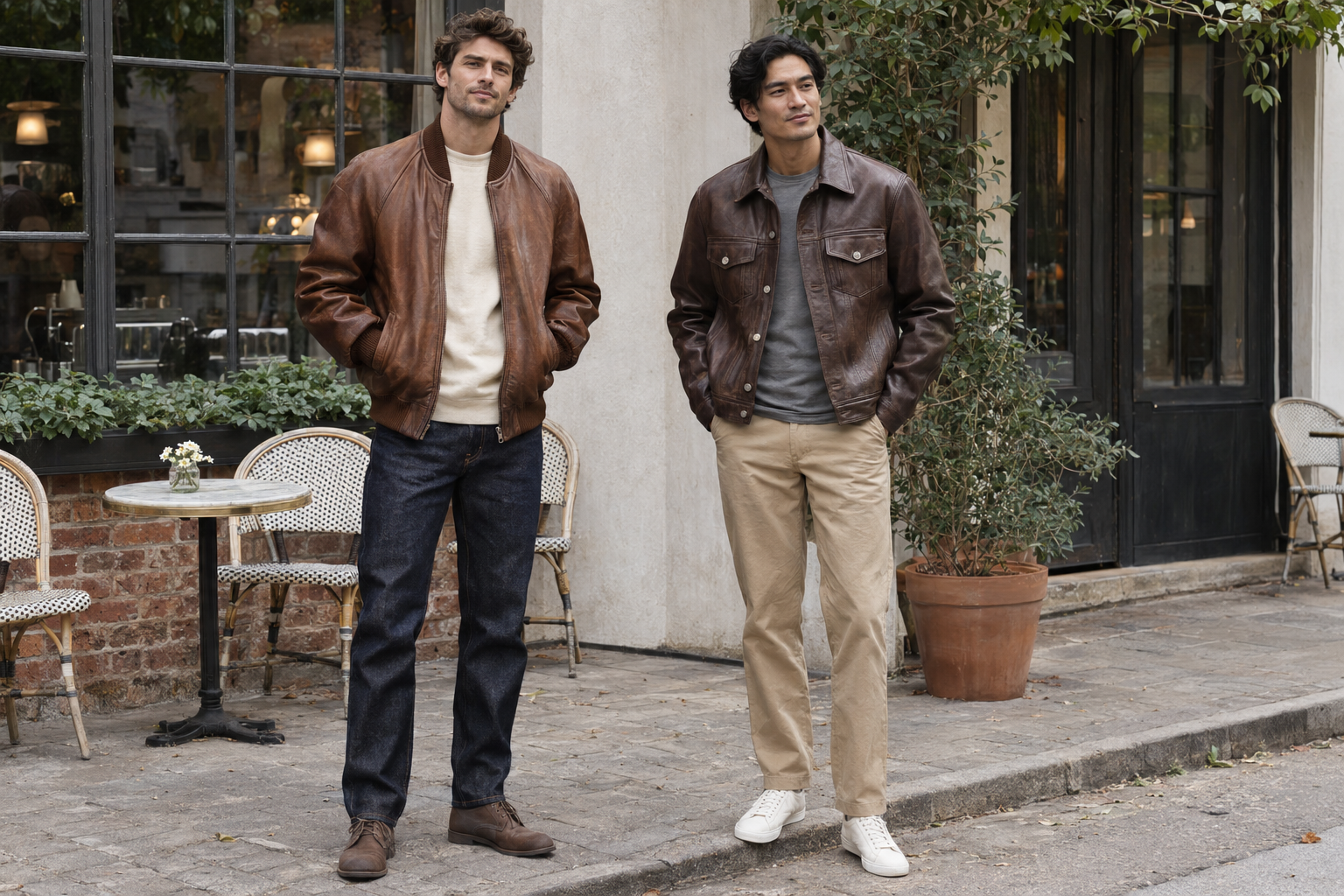

A leather bomber often gathers at the waist. A leather trucker usually keeps a straighter edge, with visible seams shaping the body.
The leather bomber vs trucker jacket choice starts with that difference. Check how each shape works with your layers, trousers, and daily movements.
Key Takeaways
Both styles have familiar features, but neither follows one fixed pattern.
Judge the individual jacket before making assumptions about room, weight, or warmth.
A bomber jacket shape often combines body volume with a gathered hem.
Leather trucker style usually includes a shirt collar and defined front panels.
A bomber can have a shirt collar rather than knitted neck trim.
Waistband comfort matters while sitting as well as standing.
Lining and insulation determine warmth separately from the style name.
What Separates a Leather Bomber from a Trucker?
Look at where the jacket widens and where it draws inward.
The hem, cuffs, and panel seams give you useful clues about its overall shape.
These features overlap. A shirt collar does not make every jacket a trucker, and a zip does not make every jacket a bomber.
Check front, side, and back photographs. A straight-on product image can hide body volume or an adjustable back waistband.
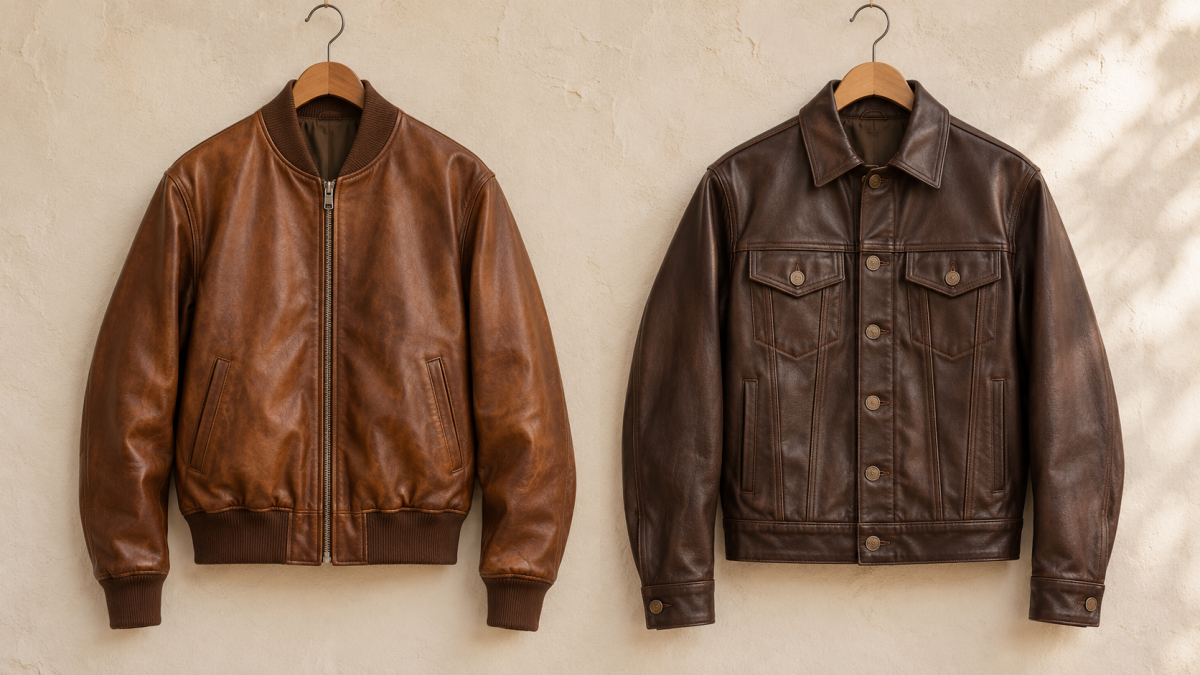
Check Where the Hem Settles
The waistband controls how the jacket rests over your trousers.
Try it seated because pressure and bunching may appear only after you bend.
For a bomber:
Check whether the ribbing grips comfortably.
Sit and notice where the leather gathers.
Raise your arms, then see whether the hem settles again.
Check whether your usual shirt bunches beneath the waistband.
For a trucker:
Close the lower fasteners without pulling the edges together.
Check how the leather waistband sits over your trousers.
Sit and feel for pressure across the lower front.
Test any side tabs without tightening them fully.
Wear trousers with your usual rise. A jacket may sit differently over a high waistband than over trousers resting lower on your hips.
Do not judge length from the style name. Both bombers and truckers can come in shorter or longer versions.
Read Actual Designs Before Choosing a Category
Product details reveal variations that broad style descriptions miss.
Compare the collar, sleeves, closure, and waist rather than relying on the label alone.
For example, Golden Bear’s Riverton bomber combines raglan sleeves, a shirt collar, a zipped front, and knitted ribbing.
That combination shows why a knitted collar is optional. The gathered waist and cuffs help establish the bomber shape.
Among men’s bomber jackets, inspect the material listing and actual cut before deciding which design offers the outline you want.
On the trucker side, Levi’s Type I leather jacket has a double-pleated front, one chest pocket, and a cinch back.
Two chest pockets are therefore not essential to leather trucker style. Look at the complete design instead of counting pockets.
The description of Mango’s suede leather bomber lists a ribbed collar, elastic cuffs, and ribbed edges alongside its suede construction.
Suede describes the surface rather than the silhouette. Decide which shape you prefer before choosing between a napped or smooth finish.
Match the Shape to Your Everyday Clothes
Use outfits you already wear during the fitting.
Check each jacket open and fastened because the front can sit differently.
Try a bomber with:
A cotton crewneck and straight jeans.
A fine cotton sweater and chinos.
A plain T-shirt beneath a fuller body shape.
Try a trucker with:
A simple knitted top and casual trousers.
A T-shirt that leaves the collar unobstructed.
Jeans in a shade you enjoy beside the leather.
Check how much shirt shows below the hem. A visible layer can look intentional, but decide whether you like its proportions.
Test your thickest planned layer too. Extra space through the body does not guarantee enough room at the upper arms or shoulders.
Test Sleeves, Pockets, and Movement
A jacket should remain comfortable during ordinary tasks.
Check movement directly rather than assuming one sleeve construction will suit you better.
Reach forward as if typing or holding a steering wheel.
Bend your elbows and check pressure around the upper arms.
Rest your wrists on a table to assess cuff comfort.
Put your phone in its intended pocket and sit down.
Check pocket access with the front fastened.
Wear your usual bag and feel where its strap rests.
Raglan sleeves extend toward the neckline; set-in sleeves join around the shoulder. Neither construction alone guarantees comfortable reach.
If buying online, ask for upper-arm or sleeve measurements where needed. Compare them with a jacket that already fits comfortably.
Choose Warmth and Care Separately
A bomber is not automatically warmer than a trucker.
Read the lining, insulation, leather, and trim details before choosing for a season.
Check:
Whether the jacket has added insulation.
The body and sleeve lining materials.
The composition of knitted cuffs and waistband.
The maker’s cleaning instructions.
Whether worn trim can be repaired or replaced.
If certain fibers irritate your skin, check the ribbing composition. Knitted trim may contain wool, cotton, synthetic fibers, or a blend.
A roomy cut can accommodate layers, but that does not establish winter warmth. Judge the actual garment against your weather and routine.
Conclusion
Choose a bomber if you enjoy fullness above a gathered waist. Choose a trucker if you prefer its panelled body and shirt-like details.
Check seated comfort, sleeve movement, pocket access, and layering room before buying. Assess warmth and maintenance from the specifications rather than the style name.
FAQs
Some questions concern changes after purchase rather than the initial fitting.
These points help you judge adjustment options and possible repairs.
Can Side Tabs Make a Loose Trucker Fit Slimmer?
Side tabs adjust a limited area, usually near the waist. They do not reduce excess room through the shoulders, chest, or sleeves.
If the whole jacket feels too large, try another size or cut. Tightening the waist alone may leave unwanted folds above it.
Can Worn Bomber Cuffs Be Replaced?
A leather repair specialist may be able to replace knitted cuffs or waistband trim. Access, stitching, and the jacket’s construction affect the work involved.
Matching the original color, thickness, and stretch can be difficult. Ask for an assessment before buying a used jacket with damaged ribbing.
Words Minimum :
Add Comments